



Regional Diwali Flavors Across India
Diwali is as much a celebration of the senses as it is a festival of lights, and at its very heart lies food. Across the subcontinent, the arrival of autumn brings a tapestry of regional harvests, age-old recipes, and micro-traditions handed down through generations. While boxes of commercial sweets circulate in corporate halls, the true magic of Diwali is cooked in family kitchens, where every state crafts its own signature feast.
Here is a curated culinary tour of six distinct regional delicacies that define Diwali across India.
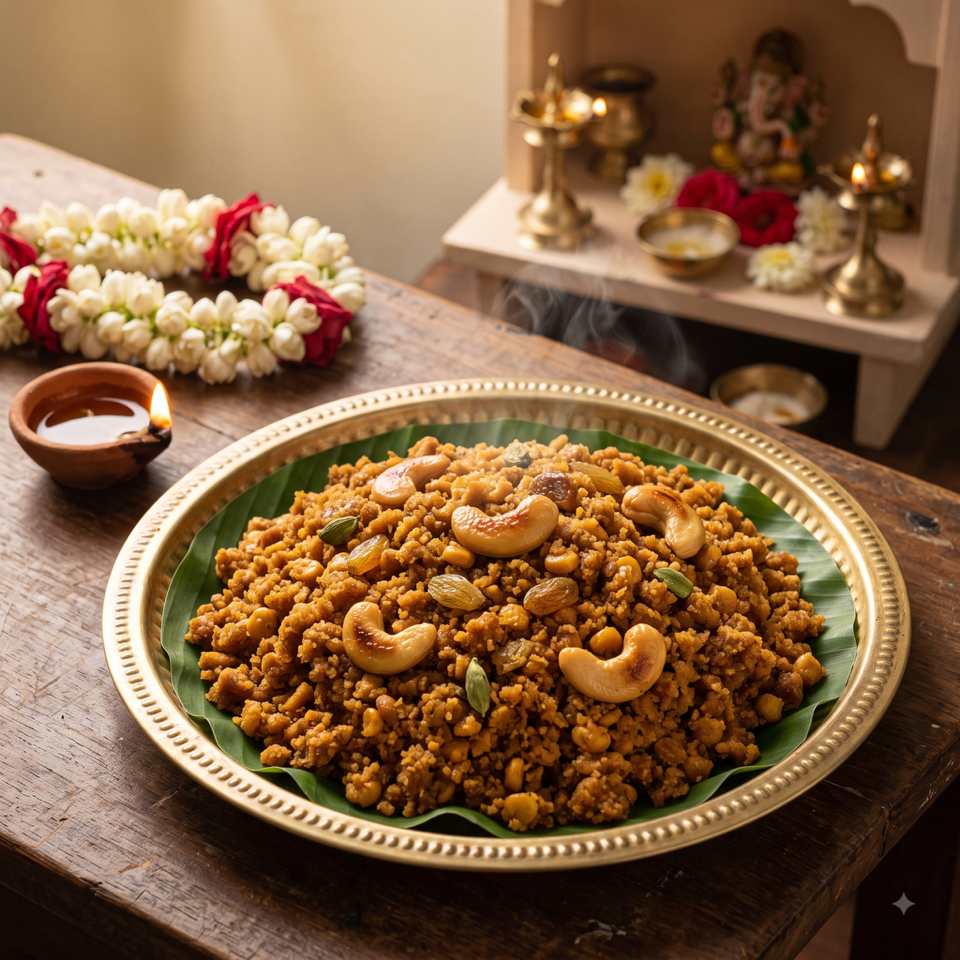
Ukkarai (Tamil Nadu)
In South India, Diwali morning begins before dawn with a traditional oil bath, followed immediately by an auspicious bite of Ukkarai. Originating in the Chettinad and Tamil Brahmin traditions, this comforting, sweet is crafted from yellow split chickpeas (chana dal), jaggery, roasted nuts, and fresh cardamom, all cooked down in rich ghee.
The Tradition: Ukkarai is traditionally offered as neivedhyam (sacred offering) during the early morning puja before the rest of the festive feast begins.
Puran Poli (Maharashtra)
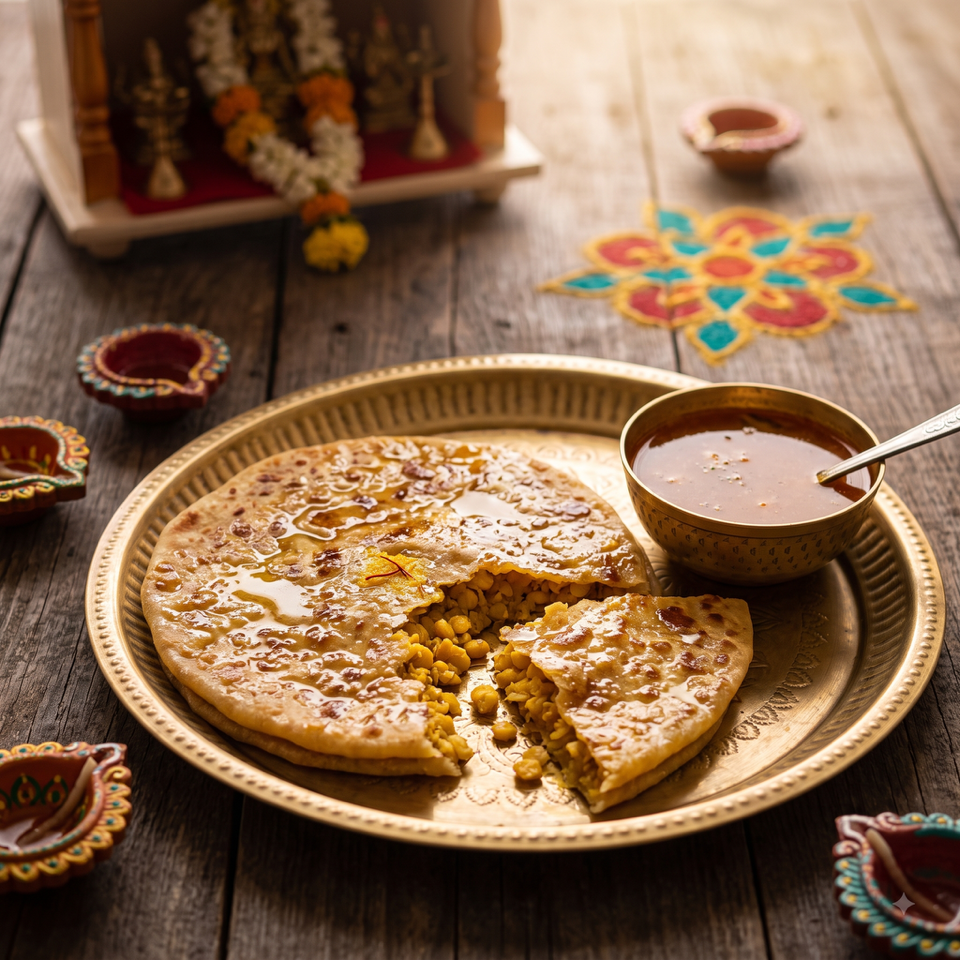
While Maharashtra is famous for its elaborate savory Faral hampers, no Diwali meal is complete without Puran Poli. This tender, golden flatbread is stuffed with a rich filling of cooked chana dal and jaggery, scented with nutmeg, cardamom, and a pinch of saffron.
The Tradition: Served warm during family Diwali lunches, often accompanied by Katachi Amti—a spicy, tangy thin broth made from the reserved lentil water.
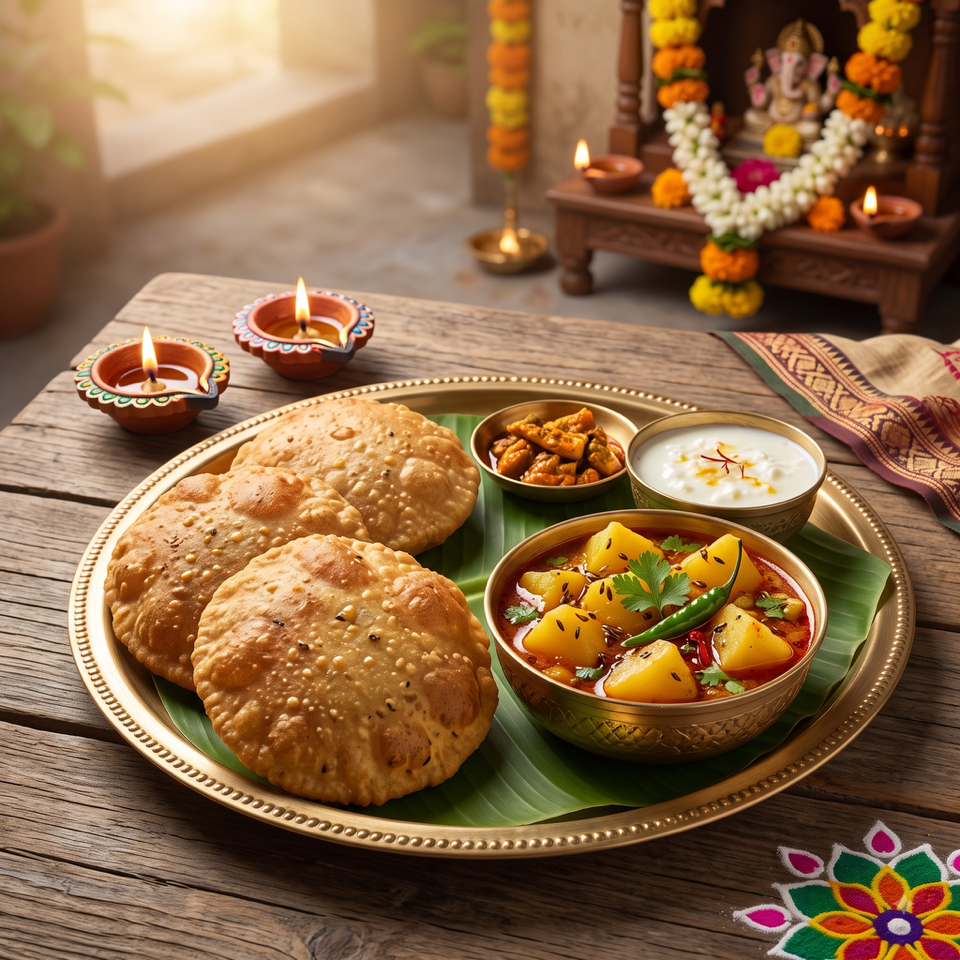
Bedmi Puri & Aloo Bhaji (Uttar Pradesh)
In North India, Diwali morning calls for a hearty, savory banquet that sets the tone for a day of celebration. Bedmi Puri—a deep-fried, crisp flatbread made of coarse wheat flour kneaded with spiced, ground urad dal, is the star of the North Indian festive breakfast table.
The Tradition: Prepared in large quantities to welcome visiting family, neighbors, and guests throughout the day.
Mawa Kachori (Rajasthan)
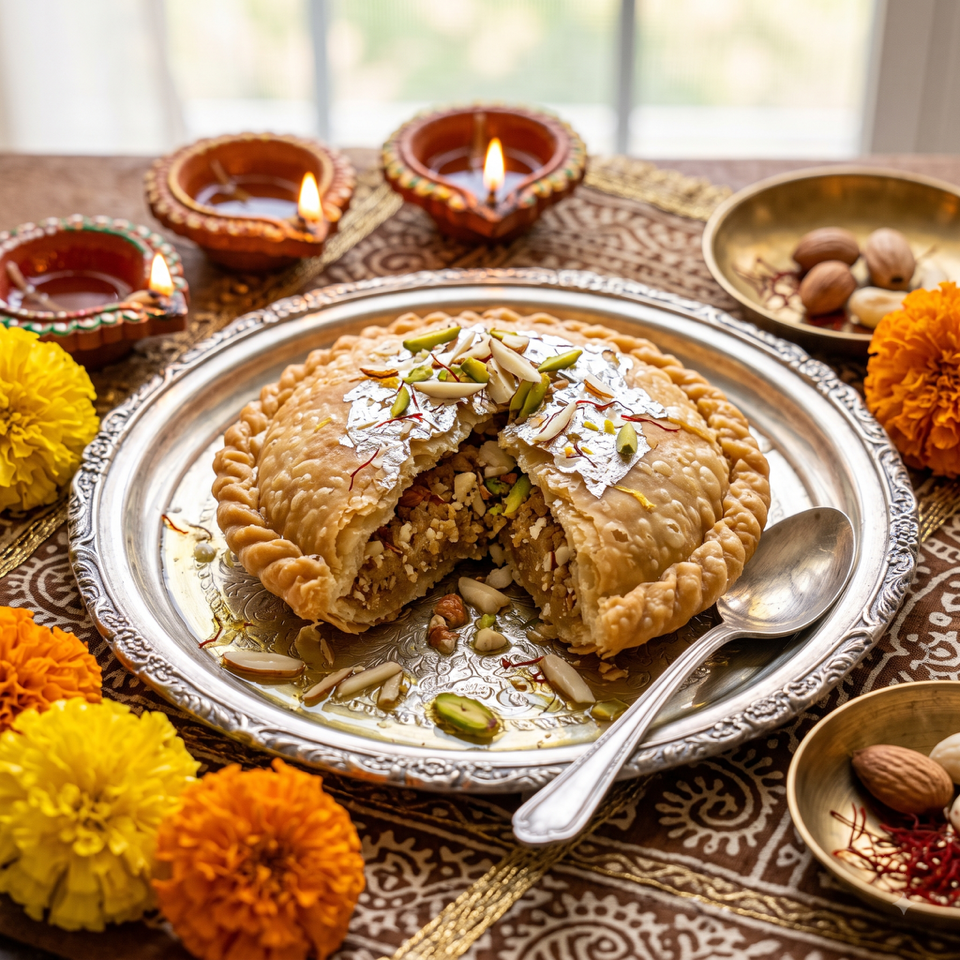
Hailing from the sun-drenched kitchens of Jodhpur, Mawa Kachori elevates the humble savory kachori into a regal dessert fit for royal Diwali feasts. Flaky, deep-fried pastry crusts are stuffed with a rich mixture of sweetened khoya (mawa), crushed almonds, pistachios, and cardamom, then dipped in a fragrant saffron sugar syrup.
The Tradition: A prized Diwali gift exchanged between families across Rajasthan, representing royal hospitality and prosperity.
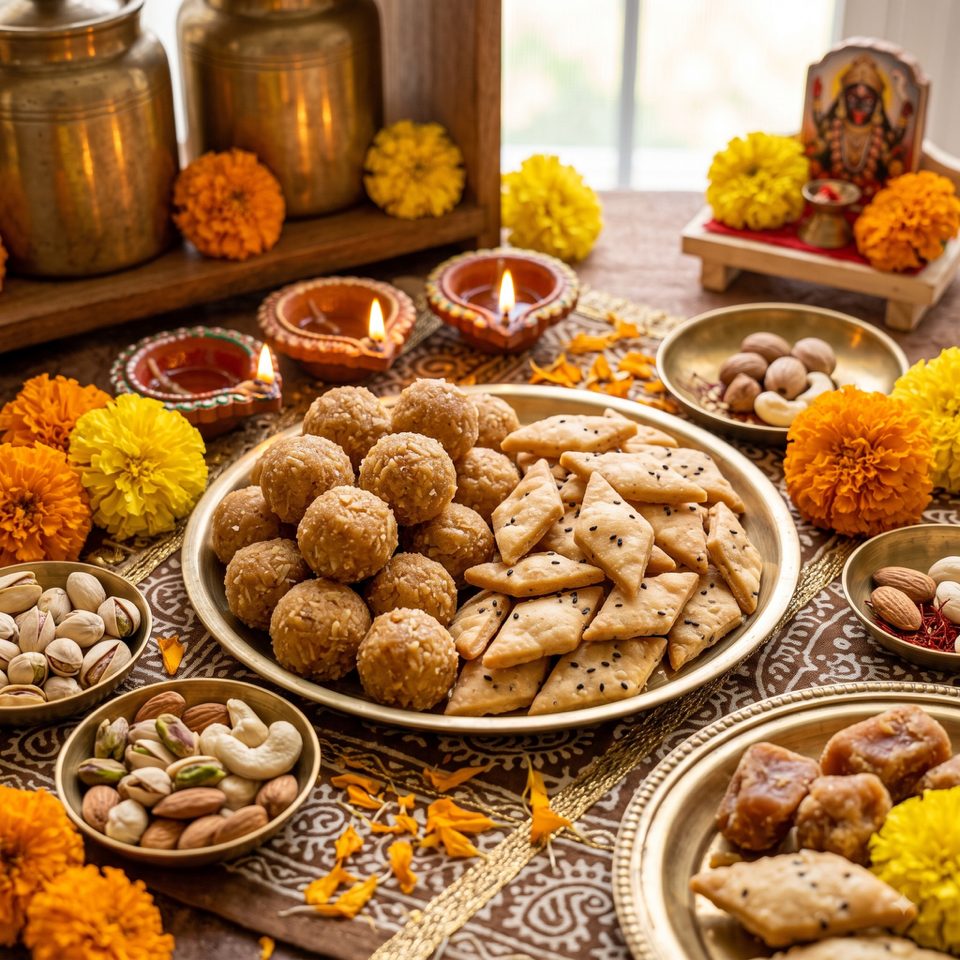
Naru & Nimki (West Bengal)
In Bengal, while Durga Puja centers on grand temple feasts, Diwali (celebrated alongside Kali Puja) brings an intimate focus on home-cooked snacks. Coconut Narus (sweet coconut balls cooked with date-palm jaggery or condensed milk) are paired alongside Nimki, crisp, salted flour diamond bites spiced with nigella seeds (kalonji).
The Tradition: Prepared days in advance in large brass jars, these delicacies are offered to every guest who steps over the threshold during the festive week.
Anarsa (Central & Western India)
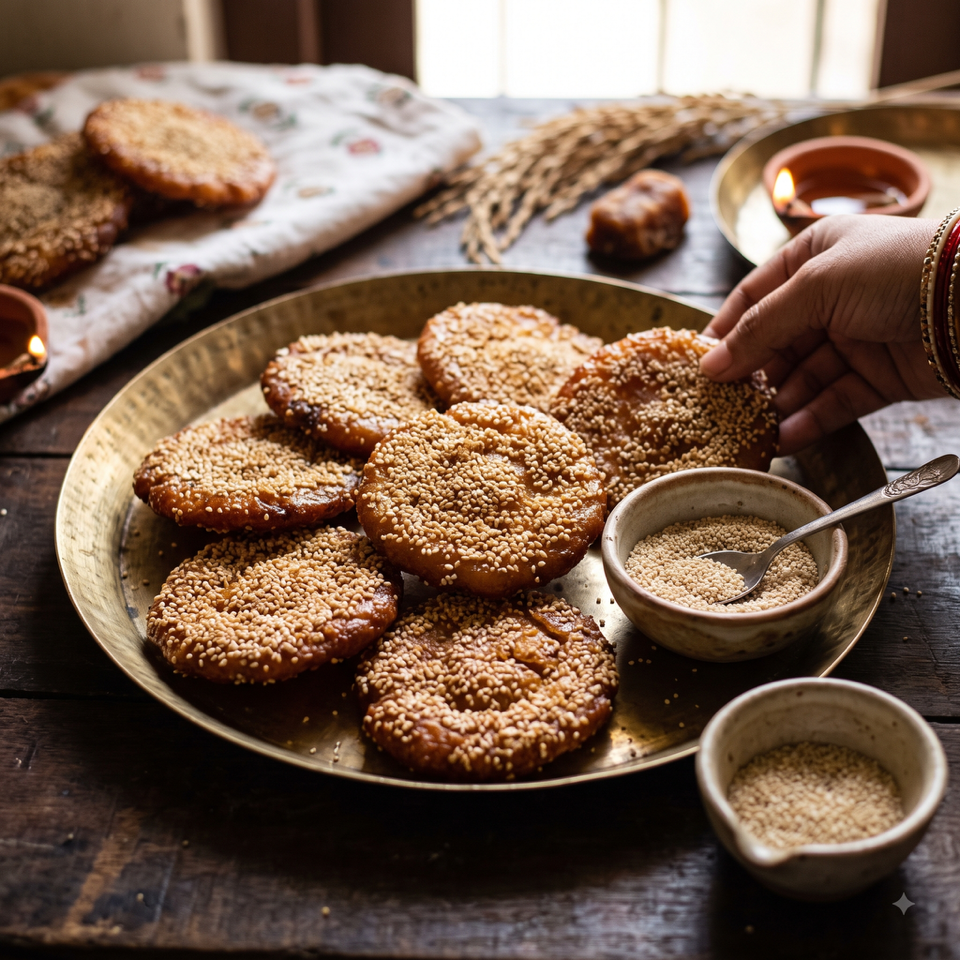
Popular across Maharashtra, Bihar, and parts of Central India, Anarsa is an ancient, skill-intensive festive sweet that requires days of patience. Soaked rice is dried, finely ground, combined with jaggery or sugar, aged for a few days, and then shaped into small discs coated in poppy seeds (khus khus) before being fried in ghee.
The Tradition: Making Anarsa is considered a true mark of culinary mastery, often prepared collectively by women in the household in the days leading up to Diwali.